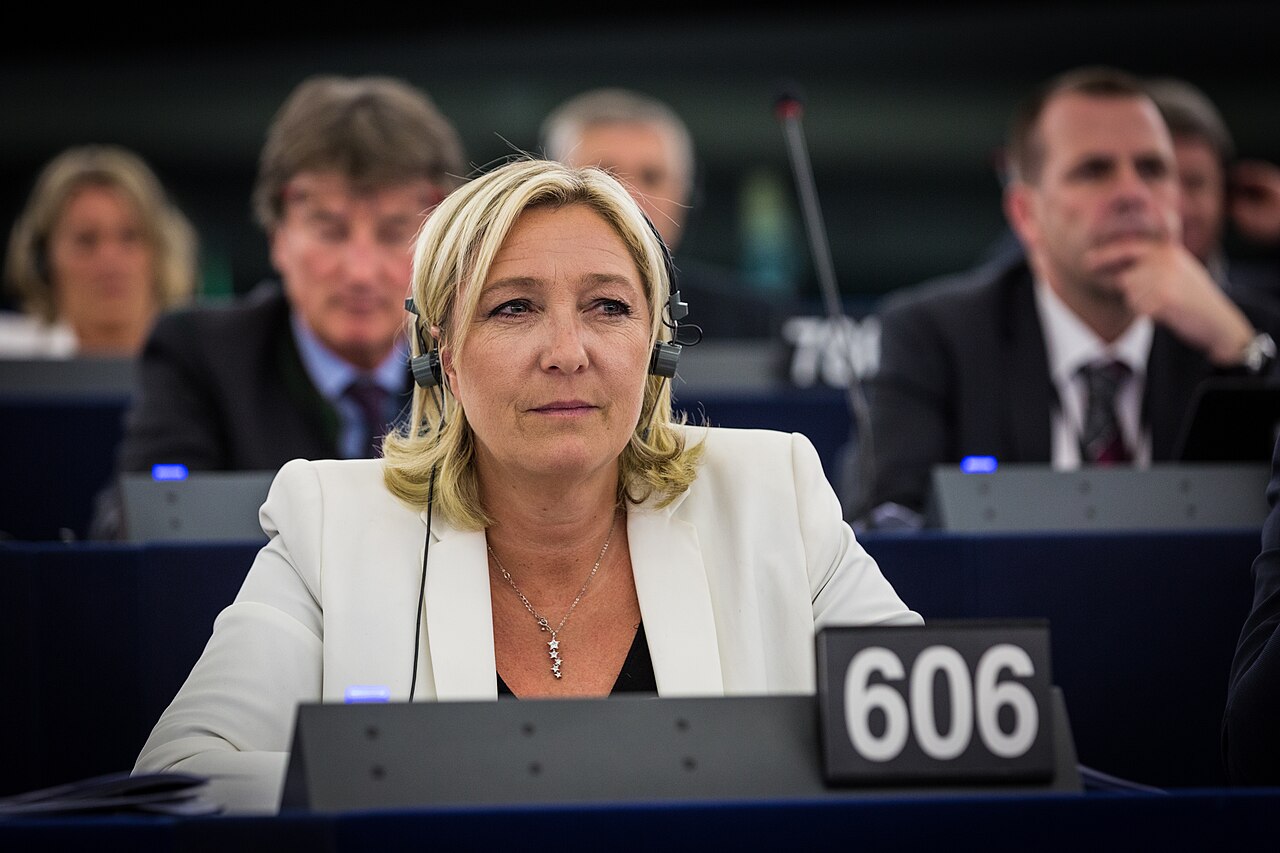
The Electronic Bracelet Dilemma: Marine Le Pen's 2027 Presidential Ambitions Hang in the Balance
The political landscape of France is abuzz with uncertainty as Marine Le Pen, a towering figure of the French far-right and perennial presidential hopeful, faces a critical legal challenge that could derail her 2027 bid for the Élysée Palace. At the heart of this controversy is the potential imposition of a bracelet électronique, or electronic tag, a judicial measure that Le Pen has unequivocally stated would render her presidential campaign impossible. This unprecedented situation not only puts her political future at stake but also potentially paves a clear path for her protégé, Jordan Bardella, to step into the spotlight as the Rassemblement National (RN) standard-bearer.
For years, Marine Le Pen has been a formidable force in French politics, consistently reaching the final round of presidential elections. Her 2027 candidacy was widely anticipated, building on her strong performance against Emmanuel Macron in previous contests. However, a forthcoming decision from the Paris Court of Appeal, expected on July 7, could dramatically alter these plans. The court is set to rule on an appeal concerning allegations of misuse of European Parliament funds, a case that has shadowed Le Pen and her party for years. If the verdict includes a mandate for her to wear an electronic bracelet, Le Pen has made it clear: she will not be a candidate. This declaration sends shockwaves through French political circles, forcing a re-evaluation of the entire electoral landscape and bringing the focus squarely onto the implications of a judicial decision on a political leader's eligibility.
The Legal Shadow: How an Electronic Bracelet Threatens a Presidential Campaign
The legal troubles for Marine Le Pen stem from accusations that she, along with other members of the Rassemblement National, misused European Parliament funds between 2004 and 2016. These funds were allegedly diverted to pay parliamentary assistants who, prosecutors argue, were instead performing duties for the party in France, rather than their official European parliamentary roles. A judgment in March 2025 found her and others guilty, leading to the current appeal process.
The potential penalties are severe and varied. They include financial penalties, a period of ineligibility for elected office, a prison sentence (with a portion suspended), or, crucially, the requirement to wear an electronic bracelet. During the appeal, the public prosecutor's office notably requested a five-year ineligibility period, a four-year prison sentence (three of which would be suspended), and a €100,000 fine. While the ineligibility aspect could also block her candidacy, it is the more symbolic and logistically challenging electronic bracelet that Le Pen has highlighted as an absolute deal-breaker.
Le Pen has consistently denied the accusations, asserting that she was not at the heart of any fraudulent system and believes the appeal court will rule in her favor if it "applies the law." She views the upcoming July 7 decision as a monumental moment, stating, "I know very well that the decision concerning this candidacy does not belong to me. It is now in the hands of three magistrates who will decide whether or not the millions of French people who want to vote for me will be able to do so." This statement underscores the profound impact a judicial ruling can have on democratic processes and the aspirations of millions of voters. To delve deeper into the significance of this date, consider reading Marine Le Pen's 2027 Candidacy Hinges on July 7 Bracelet Verdict.
"Impossible to Campaign": The Practicalities of an Electronic Tag
Marine Le Pen's vehement declaration that campaigning with an electronic bracelet is "impossible" is not merely a rhetorical flourish; it reflects deep practical and symbolic hurdles. An electronic bracelet, typically associated with house arrest or judicial supervision, would severely restrict her movements and public appearances, which are the lifeblood of any national political campaign. As she articulated on BFMTV, "We cannot campaign under these conditions... Can one campaign without going out at night to meet voters at rallies?"
- Geographic Restrictions: An electronic bracelet often comes with specified geographical limits, confining the wearer to a particular region or even specific hours at home. A presidential campaign, by contrast, demands extensive travel across the entire country, engaging with diverse communities and local officials.
- Public Perception: The image of a presidential candidate under judicial surveillance would undoubtedly be a major liability. It risks framing her as someone constrained by the legal system, undermining the very notion of leading a nation. Voters might perceive a candidate under such conditions as compromised or lacking the full authority and freedom required for the highest office.
- Logistical Nightmares: Scheduling rallies, media appearances, and private meetings, all while adhering to the strictures of an electronic bracelet, would create an insurmountable logistical challenge for her campaign team. The spontaneity and responsiveness crucial to political campaigning would be severely hampered.
- Psychological Impact: Beyond the practicalities, the constant presence of an electronic tag carries a significant psychological burden. It could impact her morale, energy, and ability to project the unbridled confidence necessary for a presidential hopeful.
These challenges are not unique to Le Pen but highlight the tension between judicial accountability and the demands of high-stakes political office. Her refusal to proceed under such conditions underscores the fundamental incompatibility between these two realities. More on her strong stance can be found in Le Pen: 'No 2027 Presidential Campaign with Electronic Bracelet'.
The Rise of Jordan Bardella: A Successor in Waiting?
Should Marine Le Pen be forced to withdraw from the 2027 presidential race, her designated successor is already waiting in the wings: the charismatic 30-year-old Jordan Bardella. Bardella has rapidly ascended within the Rassemblement National, becoming its president in 2022 and leading its list to a resounding victory in the recent European elections. His youthful appeal, combined with a polished media presence, positions him as a credible, albeit less experienced, alternative.
Bardella's potential candidacy would represent a significant generational shift for the RN. While Le Pen has carefully cultivated a more "respectable" image for the party, moving it away from the overt extremism of its origins under her father, Jean-Marie Le Pen, Bardella could accelerate this modernization. His presence might attract younger voters and those less burdened by the party's historical baggage. However, questions remain about his ability to command the broad national appeal that Le Pen has painstakingly built over decades.
Le Pen has outlined a potential role for herself should Bardella become the presidential candidate. She envisions herself as an adviser, offering her "presence, advice, and experience" to a Bardella presidency. She explicitly rejected the idea of exercising "tutelage" over him, suggesting a partnership of equals rather than a mentorship in name only. This dynamic would be crucial for the RN's stability, ensuring a smooth transition of power and minimizing internal divisions that could weaken the party's electoral prospects.
Broader Implications for French Politics and the RN's Future
The outcome of the July 7 verdict extends far beyond Marine Le Pen's personal ambitions. It carries profound implications for the entire French political landscape, particularly for the 2027 presidential election. If Le Pen is sidelined, the dynamics of the race would fundamentally shift:
- Impact on the Far-Right: While Bardella is a strong candidate, he lacks Le Pen's deep-seated recognition and established track record in presidential contests. His candidacy could energize new segments of the electorate but also potentially alienate some traditional Le Pen voters who value her experience and perceived gravitas.
- Opportunities for Other Parties: The absence of Marine Le Pen could open up new avenues for other candidates from the center-right and center-left, who might find it easier to campaign against a less established figure. It could lead to a more fragmented first round and a less predictable run-off.
- The Narrative of "Political Persecution": Regardless of the verdict, the RN is likely to leverage the situation. If Le Pen is found guilty, the party might frame it as a politically motivated attack by the "establishment" to prevent a populist victory. This narrative could galvanize their base, even if she cannot run herself.
- Strengthening Bardella's Position: Even if Le Pen avoids the bracelet, Bardella's prominence during this period of uncertainty has undeniably cemented his position as the undisputed second-in-command and likely successor. This crisis has inadvertently given him a national platform and experience under pressure.
This episode also highlights the delicate balance between the judiciary and the political sphere. The perception of justice, whether as impartial application of the law or politically influenced, can deeply impact public trust in institutions. The stakes are incredibly high, not just for Marine Le Pen, but for the future trajectory of French democracy.
Conclusion
The looming July 7 decision by the Paris Court of Appeal represents a pivotal moment for Marine Le Pen, the Rassemblement National, and indeed, for French politics as a whole. The possibility of an electronic bracelet hanging over her head has forced her to draw a clear line in the sand: no presidential campaign under such conditions. This firm stance has catapulted Jordan Bardella into an even more central role, accelerating his potential path to the presidency. Regardless of the outcome, this legal battle has already reshaped the contours of the 2027 election, underscoring the profound impact judicial rulings can have on the highest levels of political ambition. As France awaits the verdict, the political class and millions of voters hold their breath, knowing that the decision on the bracelet électronique Le Pen could determine the very face of the next presidential race.